




Doublez la durée de vie de votre batterie : conseils essentiels pour l’entretien de la batterie d’une trottinette électrique
Tous les conducteurs de trottinette électrique connaissent au moins une fois cette sensation de vide qui s’installe. Vous êtes à mi-chemin de votre trajet quotidien, vous jetez un coup d’œil à l’écran et regardez les barres de batterie restantes chuter soudainement. L’angoisse de l’autonomie est bien réelle, mais le pire est de constater que la santé globale de la batterie de votre trottinette s’est définitivement dégradée à cause de mauvaises habitudes de recharge.
Votre bloc-batterie lithium-ion est le cœur et la véritable source d’énergie de votre véhicule. C’est également le composant le plus coûteux à remplacer. Si vous voulez maximiser votre investissement et augmenter considérablement l’autonomie de votre trottinette pour adulte, la mise en place d’une routine proactive pour entretien de la batterie d’une trottinette électrique est incontournable.
Quel est le secret d’un entretien approprié de la batterie d’une trottinette électrique ?
Le secret pour entretenir la batterie au lithium d’une trottinette ne consiste pas à acheter du matériel de diagnostic coûteux ; il s’agit de gérer les contraintes physiques invisibles qui s’exercent sur les cellules chimiques à l’intérieur du plateau.
Les batteries lithium-ion ne s’usent pas simplement parce que le temps passe. Elles se dégradent sous l’effet combiné des contraintes thermiques, des tensions extrêmes et des vibrations mécaniques. Lorsque vous apprenez comment choisir la bonne trottinette électrique en 2026, évaluer la capacité de la batterie n’est que la première étape. La deuxième consiste à respecter la chimie interne de ce bloc d’alimentation dès le premier jour afin qu’il continue à offrir des performances optimales saison après saison.

Pourquoi la chaleur extrême et le stockage à des températures inférieures à zéro endommagent les batteries au lithium au fil du temps
Pour comprendre la dégradation d’une batterie, imaginez le bloc d’alimentation de votre trottinette électrique comme un organisme vivant. Il s’épanouit dans les mêmes zones climatiques que les êtres humains : entre 15 °C et 25 °C (59 °F à 77 °F).
-
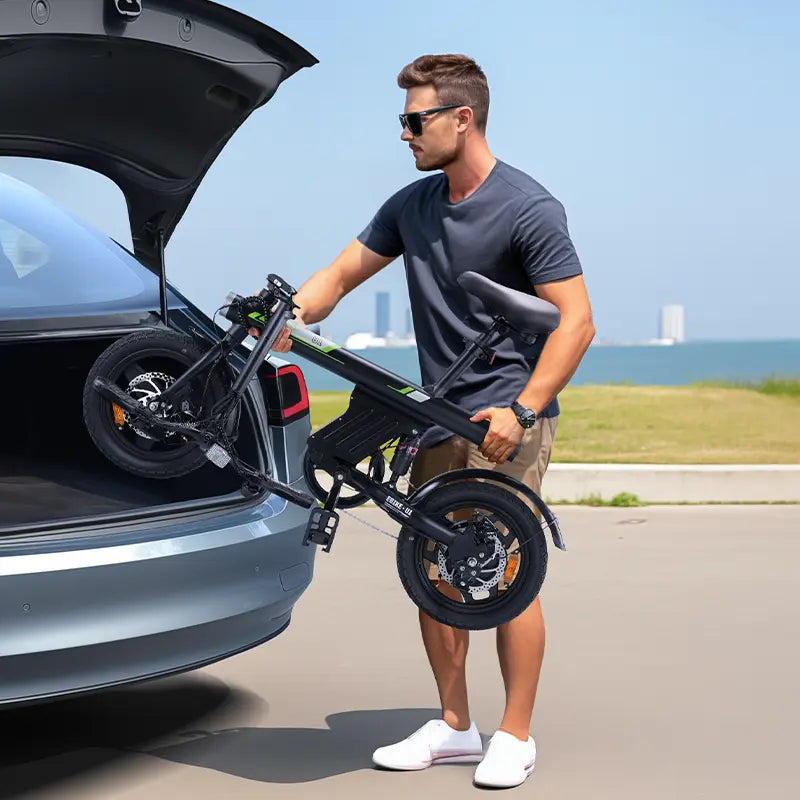
Le danger de la chaleur extrême : Garer votre trottinette en plein soleil brûlant ou la laisser enfermée dans le coffre surchauffé d’une voiture fait chauffer la batterie de l’intérieur. Les températures élevées accélèrent les réactions chimiques parasites au sein des cellules, réduisant définitivement leur capacité de stockage d’énergie et accélérant la défaillance de la batterie.
-
Le danger du froid sous zéro : À l’inverse, les températures glaciales provoquent une forte hausse de la résistance interne. Les ions lithium peinent à se déplacer dans l’électrolyte liquide, ce qui entraîne une baisse temporaire mais perceptible de l’efficacité en temps réel.
Remarque pour les conducteurs : Si vous garez votre trottinette dans un garage non chauffé ou une remise extérieure à la fin de l’automne ou en hiver, vous réduisez activement sa durée de vie. Rentrez toujours votre trottinette à l’intérieur afin qu’elle atteigne la température ambiante avant de la brancher à un chargeur.
Conçue pour durer : des protocoles de charge sûrs qui protègent les cellules
L’une des façons les plus courantes dont les conducteurs endommagent accidentellement leur batterie survient immédiatement après avoir terminé une sortie. Lorsque vous poussez une trottinette à haut rendement jusqu’à ses limites, la consommation électrique soutenue génère de la chaleur à l’intérieur du compartiment de la batterie.
Si vous branchez immédiatement le scooter sur une prise murale alors que les cellules sont encore chaudes après le trajet, vous provoquez un pic thermique cumulatif qui sollicite fortement la chimie des cellules.
Routine de refroidissement après le trajet
-
Rentrez votre scooter après votre trajet.
-
Laissez le véhicule débranché pendant 30 minutes pour laisser la température interne se stabiliser.
-
Branchez le chargeur approuvé par le fabricant pour garantir un cycle de charge stable et sûr.
-
Débranchez rapidement le chargeur dès que le voyant devient vert afin d’éviter les contraintes liées à la charge d’entretien.
Lorsque vous examinez ce qui entre réellement dans la fabrication d’un scooter électrique de qualité, le bloc-batterie principal représente une part considérable de la valeur totale de votre véhicule.

Comment fonctionne la règle des 80/20 ? Comprendre concrètement la dégradation des batteries
Si vous voulez absolument doubler la durée de vie de votre batterie, vous devez comprendre Règle des 80/20.
Les cellules lithium-ion subissent la plus forte tension physique lorsqu’elles sont complètement chargées (100 %) ou complètement vides (moins de 20 % de charge). Imaginez que vous étirez un élastique : le maintenir constamment à sa limite absolue affaiblit progressivement son élasticité.
|
Niveau de charge de la batterie |
État de la contrainte chimique |
Action requise |
|
0 % à 20 % |
Forte contrainte due à la tension et risque de décharge profonde |
Évitez la décharge profonde : Rechargez rapidement pour éviter que les cellules ne descendent sous les seuils critiques. |
|
20 % à 80 % |
Santé optimale des cellules et faible tension interne |
Le juste milieu : Maintenez votre scooter dans cette plage pour sa capacité d’utilisation quotidienne chaque fois que possible. |
|
80 % à 100 % |
Forte contrainte chimique et tension maximale |
Évitez de le laisser complètement chargé : Ne laissez pas votre scooter chargé à 100 % pendant de longues périodes lorsqu’il n’est pas utilisé. |
Dans la mesure du possible, essayez de maintenir votre capacité d’utilisation quotidienne confortablement entre 20 % et 80 %. Il n’est pas nécessaire de recharger votre scooter à 100 % après chaque court trajet dans le quartier. Le maintenir au milieu de sa plage de tension réduit considérablement l’usure interne et évite les défaillances imprévues des cellules.
Scénarios d’entreposage hors saison : préserver la santé de votre batterie lorsque vous ne roulez pas
Si vous vivez dans une région aux hivers rigoureux, votre scooter restera inévitablement garé à l’intérieur pendant plusieurs mois consécutifs. La manière dont vous gérez le stockage de l’énergie pendant cette période détermine si votre scooter redémarrera en pleine forme au printemps ou sera complètement déchargé.
-
Ne l’entreposez jamais vide : Entreposer une batterie à 0 % permet aux cellules de continuer à se décharger naturellement au fil du temps. Si la tension descend sous un seuil critique, le système de gestion de la batterie (BMS) verrouille définitivement le bloc pour prévenir les incendies, le rendant totalement inutilisable.
-
Ne l’entreposez jamais complètement chargé : Entreposer votre véhicule à 100 % pendant des mois maintient la matrice chimique sous forte tension, ce qui entraîne une perte rapide de capacité.
-
Le juste milieu : Rechargez votre scooter jusqu’à environ 50 % à 60 % de capacité avant de le garer. Vérifiez le niveau de la batterie une fois par mois et effectuez une brève recharge d’appoint si elle descend sous 30 %.
Qui doit accorder le plus d’attention à l’entretien de la batterie de son scooter ?
Bien que tous les utilisateurs bénéficient d’un entretien de base, certains doivent être particulièrement rigoureux en ce qui concerne les conseils relatifs à la santé des cellules :
-
Usagers quotidiens : Si vous comptez sur un modèle urbain agile comme le Scooter électrique Finbike W6 pour les trajets quotidiens pour éviter les embouteillages matinaux, maintenir une autonomie quotidienne prévisible est essentiel pour arriver à l’heure aux réunions.
-
Explorateurs des longues distances et des terrains : Les utilisateurs qui parcourent de longues distances sur des plateformes robustes comme le Scooter électrique tout-terrain Finbike W9 imposent à leurs systèmes une demande considérable en ampérage. Un entretien approprié empêche le couple maximal de votre moteur de diminuer dans les montées raides.
-
Utilisateurs soumis aux réglementations régionales : Si vous utilisez un véhicule spécialisé conforme aux exigences locales, comme le Scooter électrique Finbike T4 en Allemagne, préserver la santé de votre batterie d’origine garantit que votre véhicule reste conforme et fiable, sans nécessiter de modifications structurelles ultérieures.
Protéger votre investissement : pourquoi de bonnes pratiques énergétiques permettent à votre scooter de rester dans votre sélection
Comme l’indique notre documentation officielle sur les pièces, le bloc-batterie principal représente une part considérable de la valeur structurelle totale de votre véhicule.
En adoptant de bonnes pratiques de sécurité en matière de recharge, en gérant soigneusement vos conditions de stockage et en évitant les décharges profondes excessives, vous influez activement sur la courbe de dépréciation de votre véhicule. Traitez vos cellules d’alimentation avec soin, et elles vous le rendront par une réponse nette de l’accélérateur, une excellente capacité à gravir les côtes et des années de liberté sans émissions.

FAQ
Est-il dangereux de laisser mon scooter en charge toute la nuit ?
Les chargeurs Finbike intègrent un système d’arrêt automatique conçu pour interrompre la fourniture active d’énergie dès que la pleine capacité est détectée. Toutefois, conformément aux bonnes pratiques du secteur en matière de sécurité incendie et afin de limiter la sollicitation supplémentaire des cellules par charge d’entretien, il est toujours recommandé de débrancher votre machine dès que le bloc de charge passe au vert.
Pourquoi l’autonomie de mon scooter diminue-t-elle légèrement à la fin de l’automne ?
Les basses températures ralentissent considérablement la vitesse des réactions chimiques internes qui se produisent dans les cellules au lithium. Cela entraîne une hausse temporaire de la résistance interne, ce qui réduit votre autonomie effective globale lors des trajets par temps froid. Votre autonomie complète reviendra naturellement lorsque les températures remonteront au printemps.
Dois-je décharger la batterie de mon scooter électrique jusqu’à 0 % pour la « calibrer » ?
Non. Contrairement aux anciennes batteries au nickel-cadmium, les batteries modernes de scooters au lithium-ion ne souffrent pas d’un « effet mémoire ». Décharger volontairement votre batterie jusqu’à zéro entraîne une forte contrainte chimique et risque de provoquer une défaillance des cellules. Il est toujours préférable de recharger votre scooter avant qu’il n’atteigne le seuil de 20 %.


